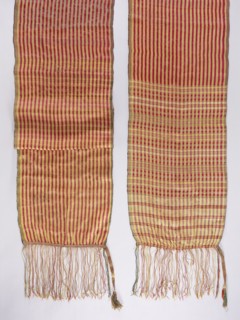
Period

24 results for: sewn-on silk fringe

  • Page
  • of
  • 1
Please sign in for more results
Belt, 19th century, Russia . Geometric ornaments; reversible kontusz belt for Polish men's costume.
LZT26A14_123

Belt, 19th century, Russia . Geometric ornaments; ...
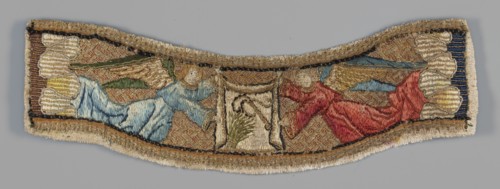
Embroidery, Embroidered parura with a depiction of two angels in flight holding between them a
LZT26A11_181

Embroidery, Embroidered parura with a depiction of...
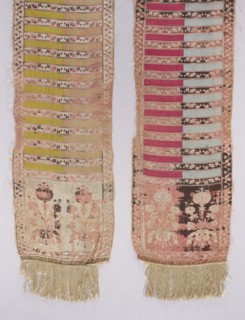
Silk kontusz sash, four-sided, c. 1787–1794. Likely made by Szczepan Filsjean Manufactory Kobylka.
LZT26A14_200

Silk kontusz sash, four-sided, c. 1787–1794. Likel...
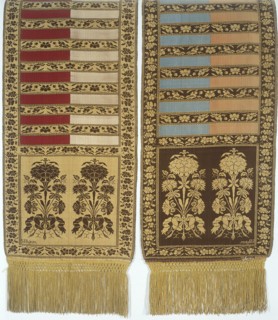
Kontusz sash, Szczepan Filsjean Manufactory Kobylka; belt manufacturer; 1787–1794. Four-sided silk
LZT26A14_142

Kontusz sash, Szczepan Filsjean Manufactory Kobylk...
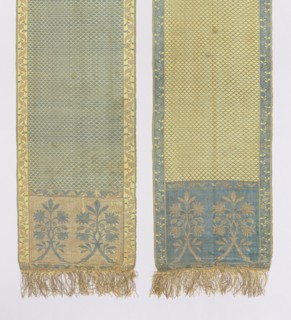
Kontusz belt, Aleksander Unrug Manufactory Kobylka; belt manufacturer; 1781–1787. Solid,
LZT26A13_361

Kontusz belt, Aleksander Unrug Manufactory Kobylka...
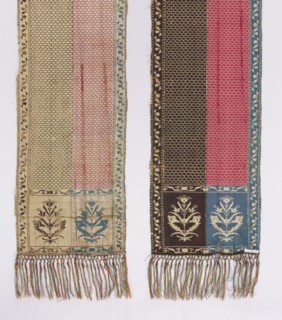
Kontusz belt, Bipartite heads with flower bush motifs in carp scale; edge with a motif of small
LZT26A14_067

Kontusz belt, Bipartite heads with flower bush mot...
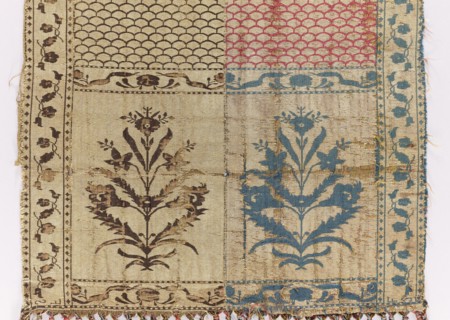
Kontusz belt, Flower bushes ornament; solid belt with carp-scale ornament; four-sided belt with
LZT26A14_068

Kontusz belt, Flower bushes ornament; solid belt w...
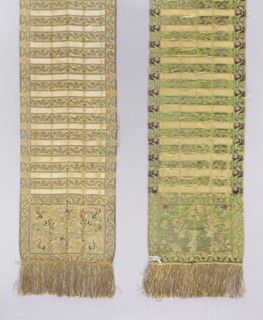
Kontusz sash, Royal Silk Manufactory in Grodno; silk fabric and belt manufacture; 1768–1780.
LZT26A14_170

Kontusz sash, Royal Silk Manufactory in Grodno; si...
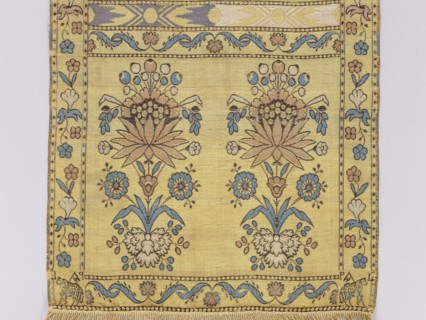
Kontusz sash by Paschalis Jakubowicz Manufactory Warsaw; belt manufacturer; 1788–1794. Maker:
LZT26A14_187

Kontusz sash by Paschalis Jakubowicz Manufactory W...
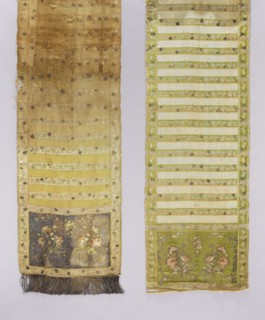
Kontusz sash, Royal Silk Manufactory in Grodno; silk fabric and belt manufacturer; 1768–1780.
LZT26A14_188

Kontusz sash, Royal Silk Manufactory in Grodno; si...
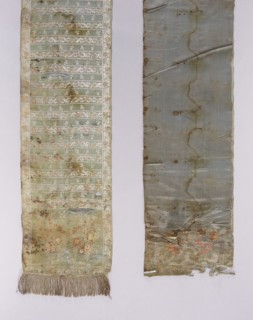
Kontusz belt, Royal Silk Manufactory in Grodno; silk fabric and belt manufacture; 1768–1780. Solid,
LZT26A14_206

Kontusz belt, Royal Silk Manufactory in Grodno; si...
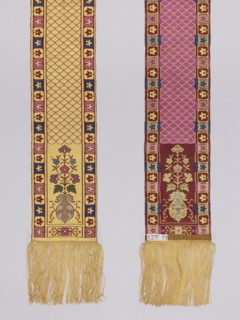
Half-belt. Double-sided silk half-belt. Each head features a single motif of a flower bouquet in a
LZT26A13_455

Half-belt. Double-sided silk half-belt. Each head ...
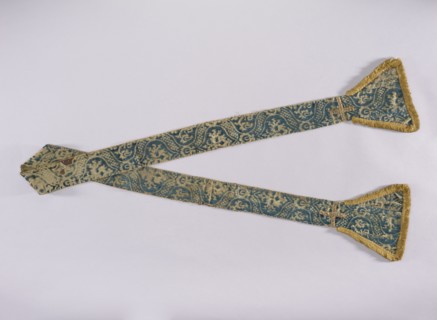
Stole, church paraments; embroidered with flowers, leaves, and crosses; liturgical vestment with
LZT26A13_463

Stole, church paraments; embroidered with flowers,...
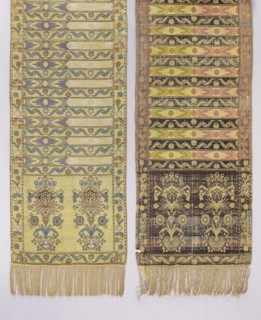
Kontusz sash, Paschalis Jakubowicz Manufactory Warsaw; belt manufacturer; 1788–1794. Bipartite
LZT26A14_186

Kontusz sash, Paschalis Jakubowicz Manufactory War...
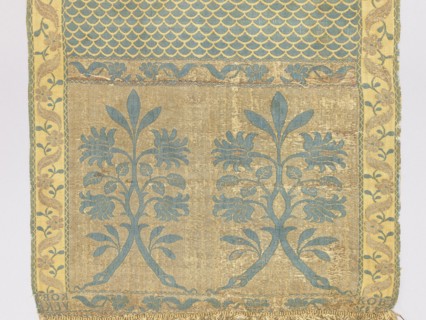
Kontusz belt, Aleksander Unrug Manufactory Kobylka; belt manufacturer; 1781–1787. Solid,
LZT26A13_362

Kontusz belt, Aleksander Unrug Manufactory Kobylka...
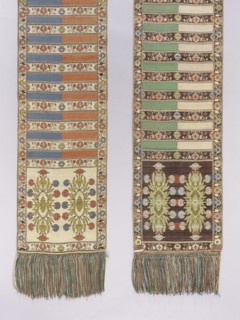
Kontusz belt; bipartite heads with a floral rosette pattern; alternating transverse stripes—plain
LZT26A14_168

Kontusz belt; bipartite heads with a floral rosett...
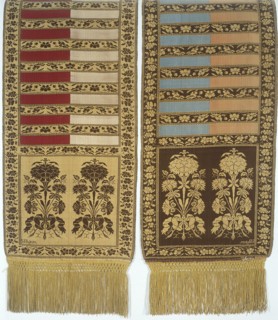
Kontusz sash, Szczepan Filsjean Manufactory Kobylka; belt manufacturer; 1787–1794. Four-sided silk
LZT26A14_143

Kontusz sash, Szczepan Filsjean Manufactory Kobylk...
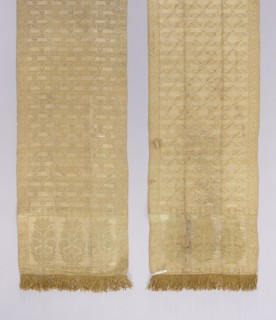
Kontusz belt. Silk with gilded silver thread; plain weave, brocaded single fabric; density 26 warps
LZT26A14_127

Kontusz belt. Silk with gilded silver thread; plai...
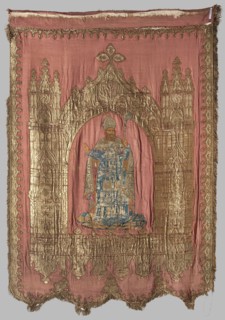
Church banner, 19th century, Poland. Church banner decorated with appliqué and embroidery. Made
LZT26A11_485

Church banner, 19th century, Poland. Church banner...
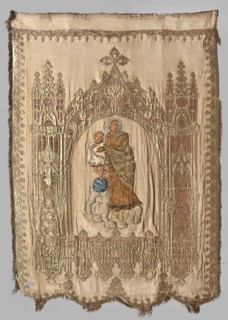
Church banner. Church banner decorated with appliqué and embroidery. Made from fabric elements that
LZT26A11_486

Church banner. Church banner decorated with appliq...
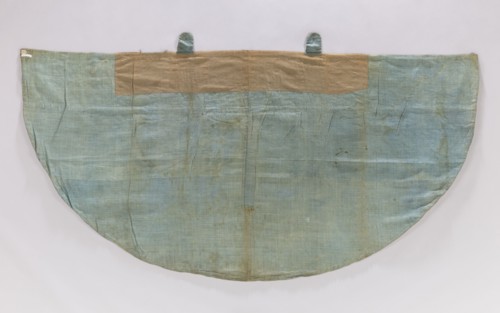
Church cope of silver brocade with Chinese motifs. Pretext sewn from two Polish fabrics: cream
LZT26A12_357

Church cope of silver brocade with Chinese motifs....
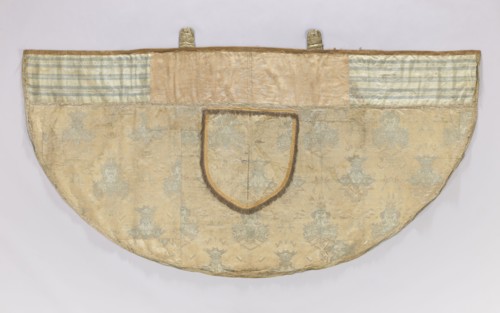
Church cope of silver brocade with Chinese motifs. Pretext sewn from two Polish fabrics—cream satin
LZT26A12_356

Church cope of silver brocade with Chinese motifs....
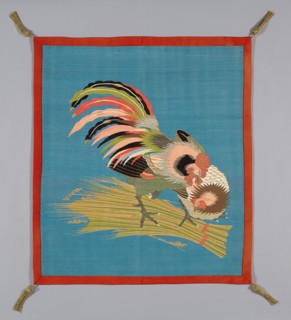
Fukusa (Gift Cover), late Edo period (1789–1868)/ Meiji period (1868–1912), 19th century, Japan,
LZT20A40_443

Fukusa (Gift Cover), late Edo period (1789–1868)/ ...
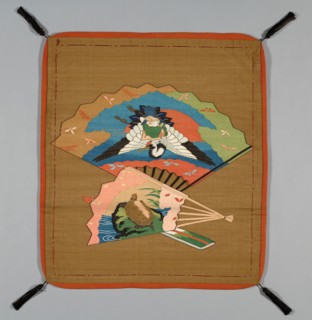
Fukusa (Gift Cover), late Edo period (1789–1868)/ Meiji period (1868–1912), 19th century, Japan,
LZT20A40_445

Fukusa (Gift Cover), late Edo period (1789–1868)/ ...