Légende
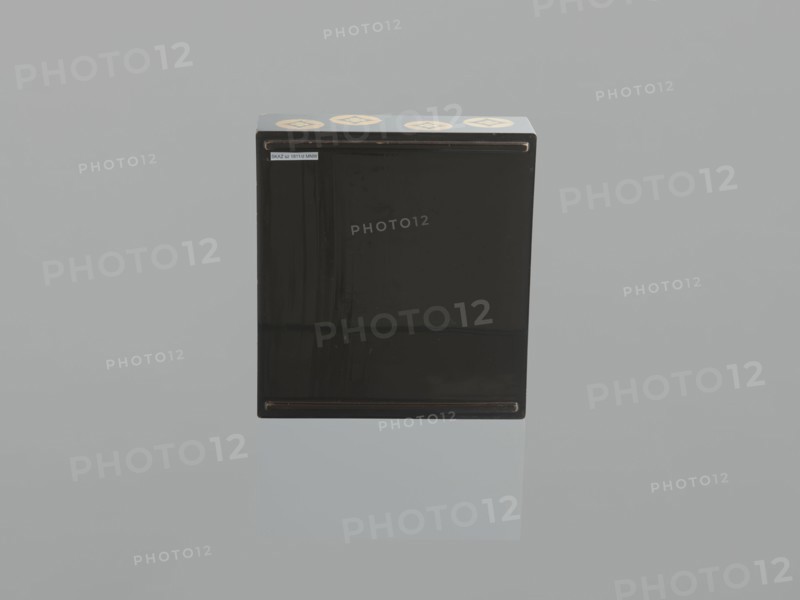
Portable picnic set sagejûbako, gift, Japanese art, Japanese, Edo 1603–1868–Meiji 1868–1912. Rectangular cabinet without side walls. On a stand are two food containers stacked set incomplete; originally four; beside them on the stand are two tin sake bottles. The top tabletop, with a handle, has one small drawer and a shelf for trays missing. Entire exterior covered with black roiro-nuri lacquer; interiors of food containers covered with vermilion lacquer. Ornament executed in hiramaki-e and nashiji techniques showing blooming wisteria, camellias, plum trees, wolfberries, leaves, and rosettes coins; includes a mon. Such portable eating sets were called in Japan kôchô, sagejû, or hanami bentô and were popular from the Momoyama period mid-16th–early 17th century and in the 18th–19th centuries. 19th century Edo–Meiji, Japan. Dimensions: height 31.3 cm; width 30.5 cm; depth 17.8 cm; weight 2.29 kg., A rectangular black box sits centered against a pale gray background with a slight glossy reflection beneath it; the box has a smooth, dark front face showing subtle vertical streaks and gloss, a top surface with pale beige circular motifs, and thin metallic-looking horizontal accents along the top and bottom edges. Colors visible include black, pale gray, beige, and a touch of metallic bronze.
Crédit
Photo12/Liszt Collection
Notre référence
LZT26A22_077
Licence
Droits gérés
Format disponible
77.2Mo (640.2Ko) / 50.8cm x 38.1cm / 6000 x 4500 (300dpi)