Légende
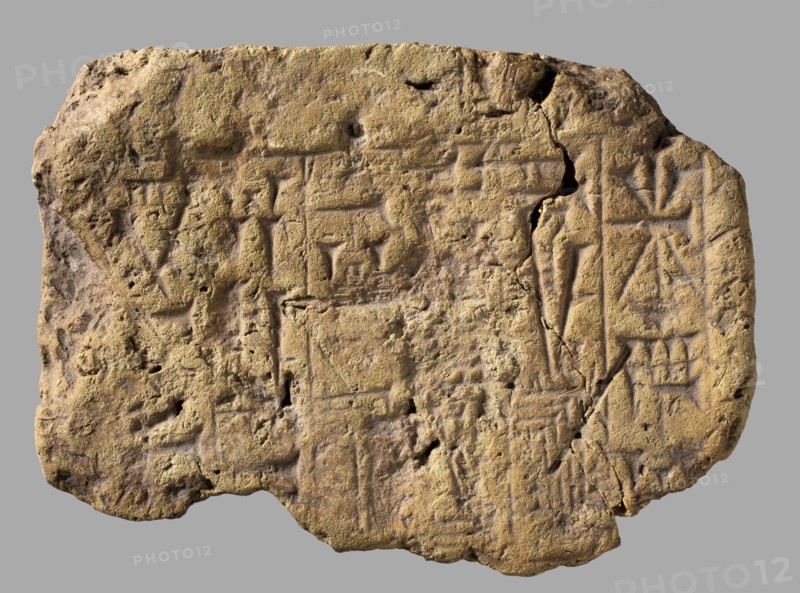
Fragment of a brick with a cuneiform inscription, Nebuchadnezzar II 604–562 BC, Esagila Babylon, bricks with a cuneiform inscription, Ezida Babylon, architectural element, cuneiform writing, Near Eastern architecture. Fragment of a brick with 6 lines, impressed with a stamp, of an inscription of the Neo-Babylonian king Nebuchadnezzar II written in archaized cuneiform character graphics. 604–562 BC reign of Nebuchadnezzar II, Neo-Babylonian period. Findspot: Babylon; possibly Borsippa. Material: brick. Weight 344 g; width 11.8 cm; height 8.6 cm; thickness 3.2 cm., A roughly rectangular, weathered clay tablet with an uneven, chipped edge sits against a plain gray background; the tablet surface is textured with shallow incised marks and worn grooves forming repeating geometric impressions and pattern-like depressions, and it shows hairline cracks and small pits across its face. The tablet's color palette includes sandy tan, warm beige, muted ochre, and hints of brown in the deeper recesses, with lighter, almost pale yellow highlights on raised areas and slightly darker brown shadows in crevices. The overall surface appears granular and eroded, with several areas where the clay is more compacted and other spots that are crumbly or flaked away, giving the object an irregular contour and a visibly aged, tactile appearance.
Crédit
Photo12/Liszt Collection
Notre référence
LZT26A02_026
Licence
Droits gérés
Format disponible
52.8Mo (6.6Mo) / 42.2cm x 31.3cm / 4989 x 3699 (300dpi)