Caption
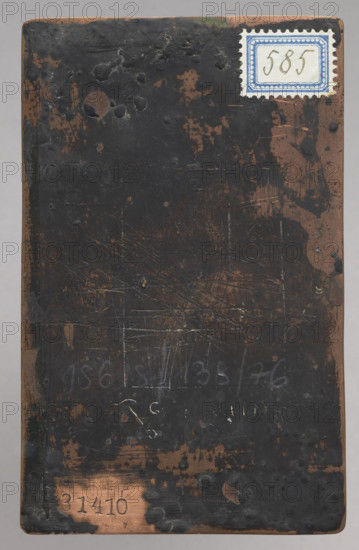
S. Erasmus (Saint Erasmus the Martyr). The copperplate depicts Saint Erasmus, a Catholic and Orthodox bishop and martyr captured during Emperor Diocletian’s reign and subjected to torture. He is shown in episcopal robes holding a book and, in the martyrdom scene, holding the crank with his entrails wound on it, with iron claws. Composition: on a rectangular profiled panel, the upper part has an oval frame with the saint in episcopal robes and the crank attribute; the frame is topped with a simplified acanthus ornament and stylized palm branches at the bottom. The lower part, in a cartouche separated by architectural elements, shows the martyrdom scene. The entire composition was drawn and etched; architectural elements of the panel, frames, background, and flames were added with a stylus. The martyrdom scene and the image are mostly etched with only traces of stylus strokes visible. The engraving was made by an expert graphic artist and may be an import; its quality differs from other anonymous works. Part of a series of graphic compositions depicting cult images, mostly made by anonymous engravers often in Vilnius monastery workshops; some engraved in Lublin and Ventspils, 2nd half of the 18th century. 18th century; graphic matrix/plate; height 10.6 cm, width 6.6 cm.
Credit line
Photo12/Liszt Collection
Reference
LZT26A74_265
License type
Rights managed
Available size
67.3Mb (3.5Mb) / 13.1in x 20.0in / 3918 x 6000 (300dpi)