Caption
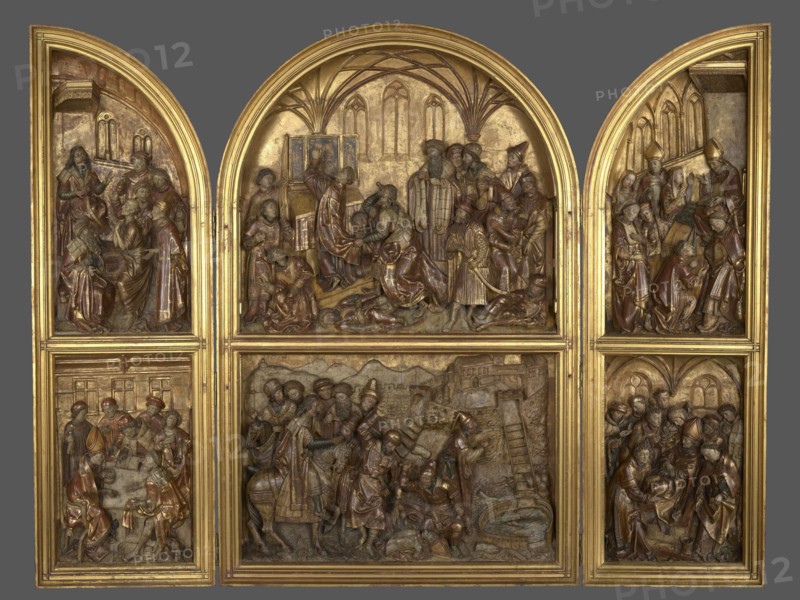
Triptych with the legend of St. Stanislaus, unknown sculptor, Hans von Kulmbach ca. 1485–1522 painter, legend of St. Stanislaus, Stanislaus of Szczepanów ca. 1030–1079, masterpiece, compare: brass crowns from the head of King Boleslaw secondary, crosier from the scene of the Murder of St. Stanislaus secondary, 1510–1520, Plawno parish church, Kraków place of origin, altar, bas-relief, A carved triptych with hinged side panels and a central arched panel, all set in a gold frame, showing detailed relief scenes populated by a group of figures in flowing robes and headpieces. The carving displays a palette of gold, brown, reddish-brown, and muted gray tones, with highlights of brighter gold on the frame and background surfaces. The upper central arched scene features several figures gathered under vaulted arches, some standing and some kneeling, with draped garments and varied headdresses. The upper left and upper right arched panels each contain groups of figures in similar robes and head coverings, arranged in conversational or reverent poses. The lower panels mirror this arrangement with narrative groupings: the central lower section includes mounted figures and a depiction of a well or basin and architectural elements in the background; the lower left and lower right panels show seated and standing figures around tables or in clustered interactions. The overall surface shows textured carving with folds in clothing, carved faces and hands, architectural niches and columns, and a consistent use of metallic gold and warm brown varnish across the relief.
Credit line
Photo12/Liszt Collection
Reference
LZT26A19_069
License type
Rights managed
Available size
77.4Mb (6.8Mb) / 20.0in x 15.0in / 6000 x 4507 (300dpi)