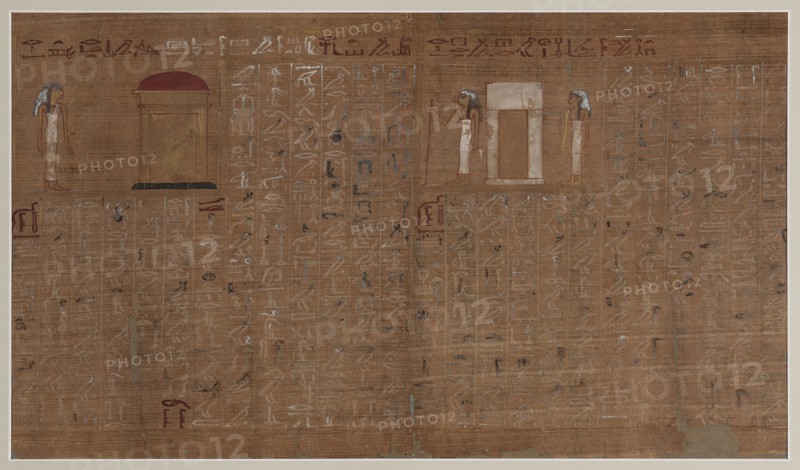
Caption
Bakai's Book of the Dead, unknown author; Bakai ca. 1550–1295 BC. Scene: Bakai standing in front of a shrine in the shape of the hieroglyph kAr; two figures of Bakai standing next to a tomb. Inscription: hieroglyphic text. Amenemopet ca. 1550–1295 BC associated. Shrine iconographic. Papyrus, height 36 cm, width 60 cm. Date: New Kingdom, 18th Dynasty reign of Thutmose III–Amenhotep II, ca. 1479–1400 BC; mid-19th century note: mid-19th-century reference retained only if part of the artwork description., A horizontal rectangular papyrus with a brown-beige background shows a few standing human figures rendered in flat profile with skin tones in yellow and brown and hair painted dark gray; one figure appears at left wearing a white dress, and two figures appear near the upper right wearing similar white clothing and holding a long thin object. Near the left-center is a simple architectural form with a rectangular base and a semi-circular red top, and to its right is another simple doorway-like structure painted in pale beige and white. The surface is covered with many pale lines and marks in white, black, and faded blue forming repeated small shapes and strokes across the sheet, with occasional darker brown and black spots and smudges; there are also a few areas of darker reddish-brown brushwork and small patches of worn or discolored papyrus. The overall color palette is brown-beige with accents of white, pale blue, dark gray, yellow, red, black, and pale beige.
Credit line
Photo12/Liszt Collection
Reference
LZT26A02_149
License type
Rights managed
Available size
58.1Mb (6.4Mb) / 19.6in x 11.5in / 5876 x 3458 (300dpi)